

A guide to ABM
What is account-based marketing?
Account-based marketing (ABM) is a B2B sales and marketing strategy that focuses on the accounts that matter most. Instead of starting with a broad audience and narrowing it down, ABM identifies the most valuable accounts first, understands what is important to them, and focuses sales and marketing effort on building the credibility and relationships needed to win and grow them.

Why it matters
B2B growth is different
According to the B2B Nations Series: United Kingdom report (B2B Nations Institute, published by Propolis, August 2026), B2B accounts for around 48% of UK economic output. Yet B2B marketing is fundamentally different from consumer marketing.
Buying cycles run longer, decisions involve multiple stakeholders, commercial complexity is greater, and credibility, relationships and trust carry far more weight.
ABM and lead generation
Turning lead generation on its head
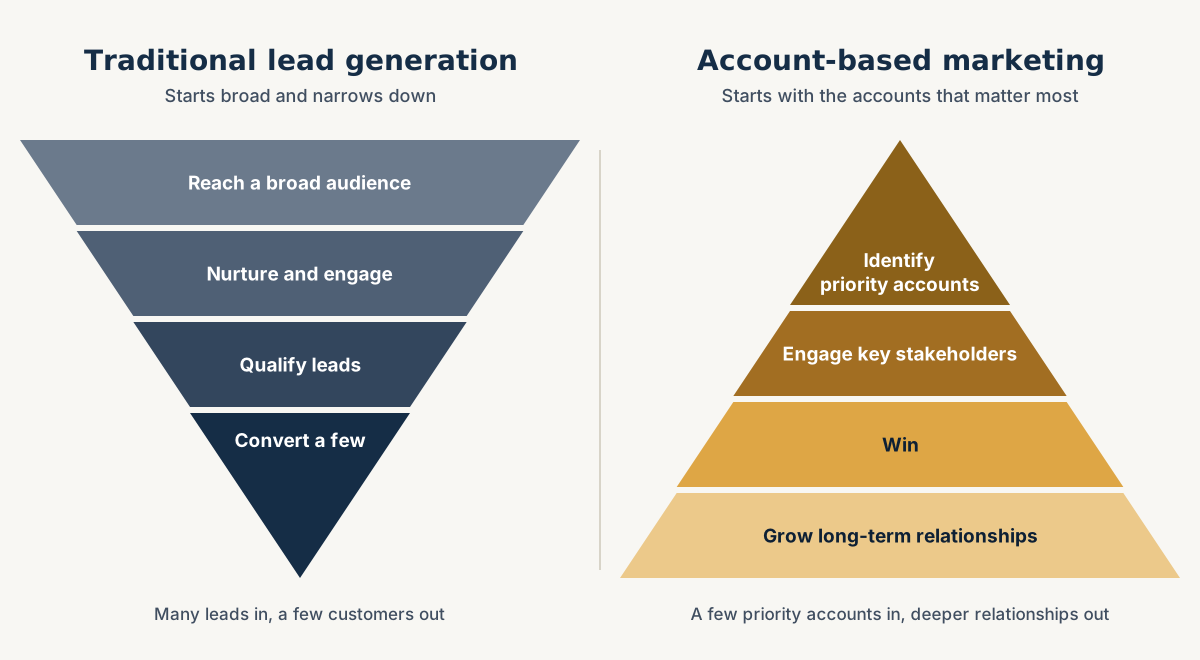
Traditional lead generation casts a wide net and works down to the few prospects ready to buy. ABM flips the funnel. It starts with the accounts that matter most and builds outwards from there, growing relationships over time.
Types of ABM
Three types of ABM
ABM isn’t one-size-fits-all. How much is invested in each account should reflect its potential value, which is why ABM is usually described in three types, as defined by ITSMA:
- 1:1
One-to-one ABM
ABM in its purest form. Each account is treated as a market of one, with highly personalised engagement and tailored content focused on building credibility and stronger relationships over time. Best suited to a small number of the most valuable accounts.
- 1:few
One-to-few ABM
An efficient way to group accounts that share similar challenges, such as organisations in the same sector, with messaging and content tailored to each group.
- 1:many
One-to-many ABM
Uses technology to tailor marketing to a larger number of named accounts at scale.
Source: ITSMA (Information Technology Services Marketing Association), now Momentum ITSMA.
ABM and DBM
A marathon and a sprint
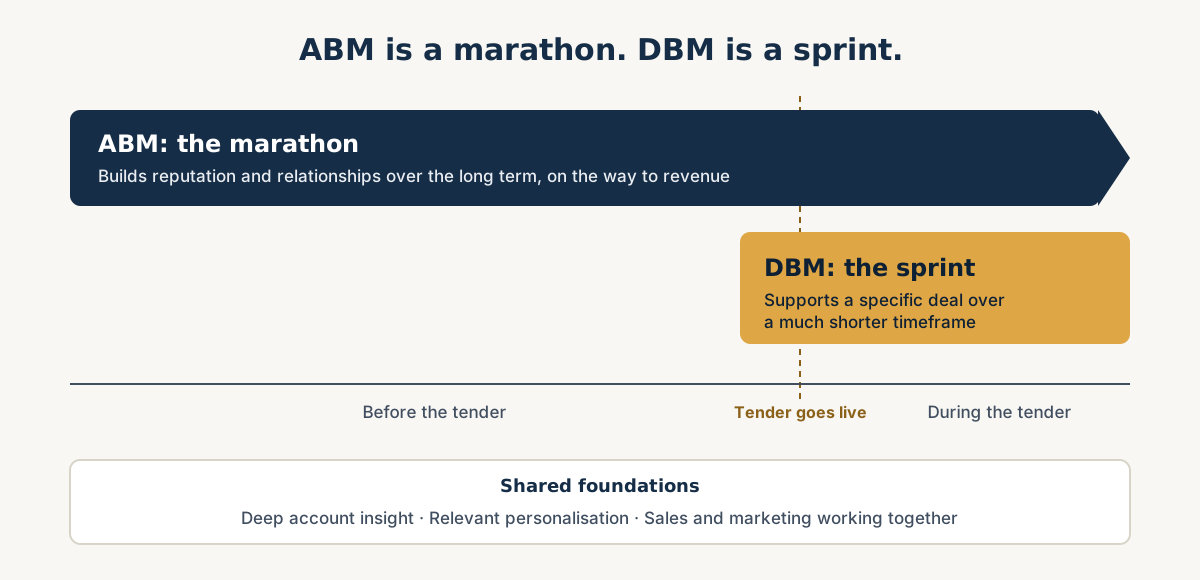
Deal-based marketing (DBM) is closely related to ABM. A useful way to think about it: ABM is a marathon and DBM is a sprint.
ABM builds reputation and relationships over the long term, on the way to revenue. DBM supports a specific deal over a much shorter timeframe, such as when a tender goes live. The two often work together, with the insight and relationships built through ABM giving a bid a stronger start.
Both rely on deep account insight, relevant personalisation, and sales and marketing working together to get the right message to the right people at the right time.
Is it right for you?
Who ABM works best for
Most organisations generate a disproportionate amount of revenue from a relatively small number of customers. The challenge is knowing which accounts deserve the greatest investment of time, budget and effort.
If your sales team is focused on winning larger opportunities, buying decisions involve multiple stakeholders, or opportunities take months rather than weeks to develop, ABM can help focus effort where it will have the greatest impact.
The common factor is not headcount or turnover, but ambitious growth goals. The best fit is usually organisations with a sales team, longer buying cycles and opportunities that depend on building relationships with multiple stakeholders over time.
The AWX approach
Effective ABM starts with the right questions
AWX Marketing starts with focus. Seven questions in particular, answered in the right order, because each answer shapes the one that follows.
- Introduction: Driving growth in complex B2B organisations is hardWhy effective ABM starts with asking the right questions, in the right order, and an introduction to the seven questions behind the series.
- Q1: Where should we focus our efforts?The biggest challenge is rarely generating more opportunities. It's deciding which sectors, accounts and opportunities deserve your best effort in the first place.
- Q2: How will we work together to achieve our goals?Shared ownership matters. Why the best programmes bring sales, marketing, operations and leadership together around common goals from the start.
- Q3: What do we really know about the accounts we want to prioritise?Having data isn't enough. The real challenge is turning information into meaningful account insight.
- Q4: How do we create a strategy and value proposition that drives growth?Strategy is about deciding how you'll win the accounts you've chosen. A clear value proposition shows you understand what matters to them and the value you can bring.
- Q5: How will we make it happen?Think programme, not campaign. A phased plan, clear success criteria and realistic budget options turn strategy into consistent action.
- Q6: How will we engage effectively?Effective engagement works in two directions: externally with your target accounts, and internally with the colleagues who help you reach them.
- Q7: What have we learned?The best programmes never stand still. Reviewing progress, capturing lessons and continuously improving helps turn experience into better outcomes over time.
Typical outcomes
What organisations can expect
While every organisation is different, common outcomes include:
- Clearer market and account priorities
- Better alignment across sales, marketing and leadership
- Stronger account insight and stakeholder understanding
- More compelling value propositions and messaging
- A practical sales enablement toolkit
- More effective engagement within priority accounts
- A structured roadmap for delivery and growth
- Continuous learning and refinement
Time and teamwork
A programme, not a campaign
ABM is a long-term strategic programme, not a quick-win campaign. Building credibility, relationships and trust within priority accounts takes time, which is why most programmes run for at least 12 months.
Sales involvement is fundamental. ABM works best when sales, marketing, senior leaders and operational teams are aligned around the same priorities, accounts and objectives.
To see how AWX Marketing could support your programme, explore How AWX Helps or download the free 7 Questions takeaway guide.

Experience
Built on experience inside complex organisations
AWX Marketing was founded by Amanda Weekes, a Chartered Manager and Fellow of both the Chartered Institute of Marketing (FCIM) and the Chartered Management Institute (FCMI), with more than 25 years’ B2B marketing experience inside complex organisations.
See how ABM has worked in practice in the featured case studies, or read more about Amanda.